
 Posts
Posts


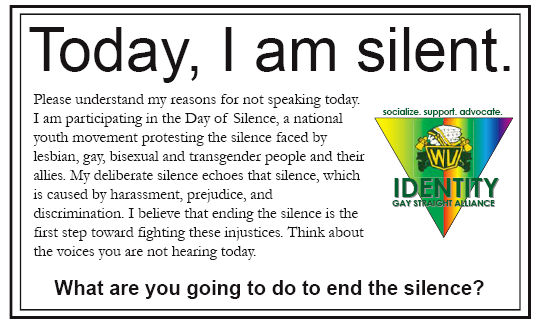 Today, my school celebrated the Day of Silence. While the national Day of Silence is actually tomorrow, our school and the Gay-Straight Alliance Club elected to move our school's Day of Silence to today, due to a large pride assembly tomorrow. Day of Silence is one school day a year where students who choose to participate do not speak for the entire school day in order to bring awareness to LGBT oppression and injustice. LGBT students are forced to remain silent about who they truly are and their identities due to bullying and other injustices, and Day of Silence is one way in which other students can support these LGBT students.
LGBT people are a class of people who have been oppressed and faced injustices, no matter what their age. LGBT students are an especially oppressed class of people because they can face insensitive bullying day after day, including hearing derogatory terms in the hallways or cyberbullying. Day of Silence is just one way fellow classmates can let LGBT students know they support them and would never dream of hurting them due to their identities or who they love. Recently, more and more students are coming forth about bullying in the LGBT student community. Studies are showing a very close relationship between this bullying and failure in school, and all-around unhappiness. Day of Silence asks "What will YOU do to end the Silence?" Students are realizing it is the hands of our generation to speak out and do something. This class of people shouldn't be oppressed just because of who they are, just like another class of people shouldn't be oppressed just for the color of their skin.

It has been inspiring to see our generation take this issue into our own hands. The Day of Silence is only one campaign we have started to help end the injustices and prejudice this class of people faces every day. Another great campaign is the It Gets Better project. Started by Dan Savage, this project takes videos and stories by celebrities and posts them on YouTube, as well as into a book, that lets LGBT teens know, "It Gets Better." This project hopes to reduce the number of suicides due to LGBT bullying/reasons, especially after a wave of teenage suicides just in this past year. This project has posted many videos on YouTube from a multitude of different celebrities and adults offering encouragement and inspiring words. Kyle, from LGBT Etcetera has a great post on this project, which you can read here.
In the end, just as I have commented in my other blogs about other classes of people, LGBT people as well as students are a class that needs to be heard. Their voices need to resonate everywhere from the Superintendent's desk to the super-conservative father who just found out his son is gay. No matter if you agree or disagree with gay rights, bullying, injustice and oppression are not okay for any class of people. School administration needs to be further educated on these students to help end the bullying. Parents need to be further educated on LGBT teenagers to help them get through the teenage years. Maybe you'll participate in Day of Silence next year, maybe you won't. It doesn't matter how you do it, but how will YOU end the silence and the bullying of LGBT people?


 is also known for her humanitarian work and her work for LGBT rights (read a great
  the Save the Children charity, which has created a special branch,
  t be in yen- $20 is about 1600 yen) and all donations go straight to the Japanese Red Cross. The Red Cross is using the money to purchase and distribute aid to the survivors and help atte





 4. Fourth, and finally, people are still losing their homes. Foreclosures peaked during April 2009, there were still approximately 36,500 mortgage modifications during December 2010 and foreclosures are expected to increase due to "major financial institutions' poor record with modifying home mortgage loans", according to a report released today and the